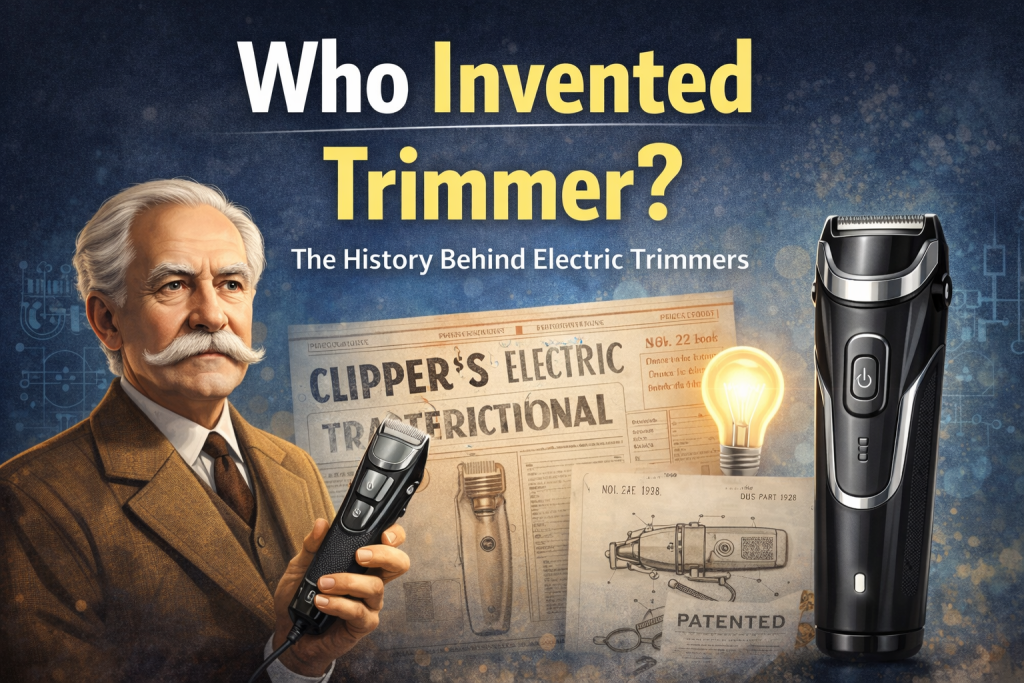
Curious about the brains behind that trusty trimmer keeping your beard sharp or fade fresh? The modern electric hair trimmer traces its roots straight to Leo J. Wahl, an inventive American who patented the first practical handheld electric hair clipper in 1919. This wasn’t just tinkering—it revolutionized barbershops worldwide, turning slow manual snips into buzzing precision cuts anyone could handle at home. But trimmers didn’t pop up overnight; they evolved from manual designs in the 1800s, blending clever engineering with a push for speed and ease. Whether you’re lining up edges in Meerut or buzzing a quick fade before a Delhi trip, today’s sleek Philips or Wahl models owe it all to these pioneers.
Grooming gear tells a story of innovation—let’s walk through who invented the trimmer, key milestones, and why it matters for your routine.
Who Invented Trimmer: The Manual Roots
Long before batteries or motors, trimmers started as hand-powered tools. Give credit to Nikola Bizumić, a Serbian barber from Ruma, who crafted the first known handheld manual hair clipper in the 1850s. Frustrated with scissors’ slog, he built a metal device with comb teeth and squeeze handles—barbers pumped it like sheep shears, clipping faster on scalps and beards. By the 1860s, these spread across Europe, cutting haircut times dramatically.
Bizumić’s genius was simple: blades over a comb, human muscle driving the action. No electricity, pure mechanics—yet it set the blueprint for everything electric. Barbershops in places like Victorian London buzzed with these; India saw similar hand-clippers in colonial salons by the early 1900s.
Picture rural barbers squeezing away for 20 minutes per client—effective, but elbow grease galore. Inventors knew power was next.
Leo J. Wahl: Who Invented the Electric Trimmer Breakthrough
Leo J. Wahl takes the crown for the electric era. Born in Illinois, he stumbled on the idea in 1911 while building electromagnetic massagers for his uncle. Vibrations sparked clipper thoughts—by 1919, he patented a handheld electric hair clipper with a motor inside the grip. No bulky cords to tables; just plug in and glide vibrating blades over a comb at thousands of strokes per minute.
Wahl refined it through 1921 patents, founding Wahl Clipper Corporation. Barbers snapped up models like the Sterling—sales exploded. He tweaked for quietness, adjustability, even guards for fades. Wahl worked till 1957, leaving a legacy: pros still swear by his gear for clean lines.
His edge? Handheld portability. Pre-Wahl, electrics were stationary beasts—his went mobile, home or shop.
Electric Razors vs Trimmers: Clearing the Schick Confusion
Folks mix up trimmers with shavers, but they’re distinct. Jacob Schick invented the first dry electric razor in 1928 (patented 1931)—foil-covered heads for close shaves, not clipper cuts. Schick’s aimed at daily face work; Wahl’s at hair lengths.
Timeline of key players:
| Inventor | Year | Invention | Standout Feature |
|---|---|---|---|
| Nikola Bizumić | 1850s | Manual clipper | Squeeze handles, no power |
| Leo J. Wahl | 1919 | Electric hair clipper | Handheld vibrating motor |
| Jacob Schick | 1931 | Electric razor | Foil for clean shaves |
| Alexandre Horowitz | 1939 | Rotary shaver (Philips) | Circular motion heads |
| Braun team | 1950s | Foil upgrades | Precision for contours |
Trimmers = hair/beard length control; razors = skin-close.
Trimmer Evolution: From Barbershops to Your Bathroom
Post-Wahl, innovation accelerated. 1950s brought lighter motors; 1970s cordless via NiCad batteries. 2000s lithium-ion made USB minis—Philips Bodygroom, Manscaped for body/pubic use. Ceramic blades cut irritation; waterproofing enabled shower trims.
India boom: Wahl imports hit Delhi salons; local brands like Nova mimic at budget prices. Fades, undercuts—Wahl’s DNA powers them. Home grooming surged post-pandemic; travel trimmers pack easy for flights.
Barber impact? Cuts dropped from 45 to 15 minutes. Global styles like French crops owe electric precision.
Modern Trimmers: Wahl’s Shadow in Every Buzz
Wahl rules pro kits—Peacemaker for silence, Lithium Pro for all-day charge. Philips Norelco blends trim-shave; Braun Series 9 edges wet-dry. Budget? Syska or Mi at ₹800.
Features now:
- Adjustable guards (0.5-25mm).
- LED battery displays.
- Skin guards for nicks.
- Quiet modes for apartments.
Meerut barbers mix Wahl with hand-clippers for tradition. Travel? Mini USBs fit carry-on fine.
Why It Matters: Grooming Revolution Unpacked
Wahl’s electric trimmer democratized sharp looks—no master scissors needed. Manscaping, beards, fades—all trace back. Patents piled up: 1920s Wahl dominated 80% US market.
India angle: Salons in UP/North-East churn fades daily—Wahl knockoffs everywhere.
FAQs: Who Invented Trimmer Essentials
First trimmer ever? Bizumić manual, 1850s.
Electric credit? Leo Wahl, 1919.
Razor inventor? Schick, 1931—different tool.
Best brand roots? Wahl, still king.
Indian first? Imports early 1900s.
Leo Wahl electrified grooming—who’s next innovator? Stay clipped